This post may contain affiliate links. If you buy through them, I may earn a small commission at no extra cost to you.
A small backyard is not a design problem. It is a design opportunity. As a landscape designer, I see the same thing again and again: tiny yards that feel cramped are rarely too small, they are just unplanned. A few smart choices about layout, materials and light can turn a narrow strip of grass into a space you actually want to sit in after work.
The best part is that none of this needs a big budget. Below you’ll find 10 small backyard ideas that cost less than you might think, followed by 7 tricks designers use to make tight spaces feel bigger, plus a few budget upgrades for your front yard. Cost ranges are rough DIY estimates in USD, so check prices in your area before you buy.
Watch the makeover
One narrow backyard, four budget upgrades.
- Swap the lawn for a gravel patio
- Build raised beds along the fence
- Hang string lights over the seating area
- Add a small bistro set
Visualization created with AI tools.
10 Small Backyard Ideas on a Budget
1. Swap the Lawn for a Gravel Patio
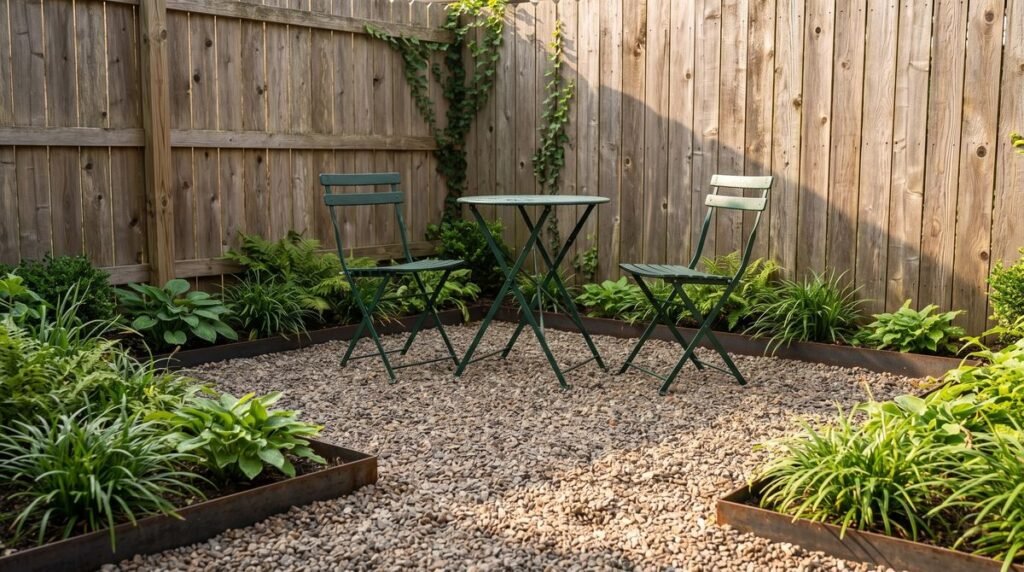
A patchy lawn in a small yard takes constant work and rarely looks good. Pea gravel or crushed granite gives you a usable patio for a fraction of the cost of pavers or concrete. Lay landscape fabric, add a simple steel or timber edge to keep the gravel in place, and spread it about 2 to 3 inches deep. Gravel drains well, feels relaxed underfoot and suits almost any style.
Tip: choose angular crushed stone if you’ll put furniture on it, because it locks together and stays flatter than round pea gravel.
Rough cost: $150 to $400 for a 10 x 10 ft area.
2. Hang String Lights Over the Seating Area
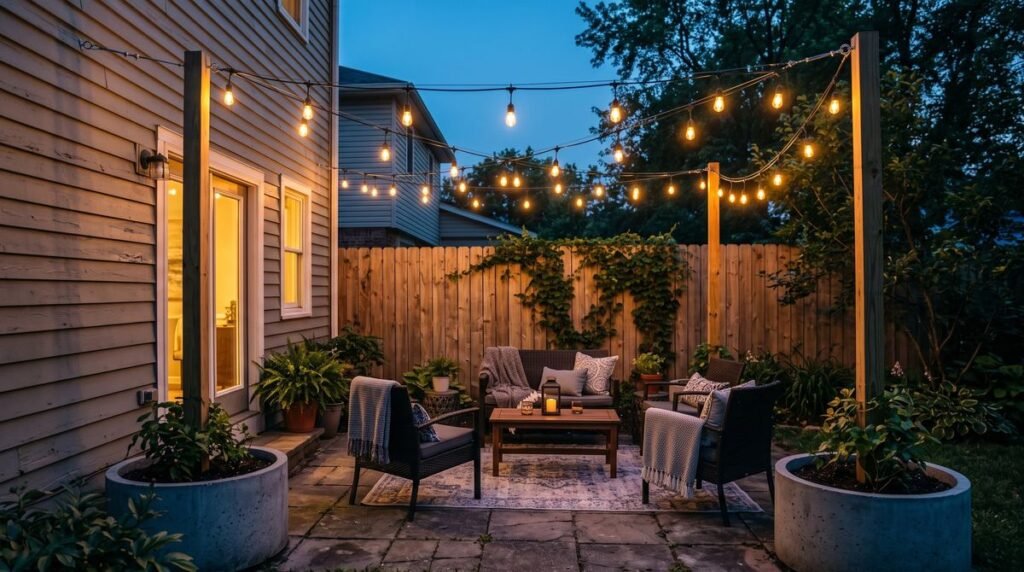
String lights are the fastest way to make a small backyard feel like a destination. Zigzag them between the house, the fence and a couple of tall posts to create a “ceiling” over your seating area. That overhead layer defines the space and makes it feel intimate rather than cramped. Weatherproof LED strands use little power, and solar versions skip the extension cords entirely.
Tip: plant the posts in large pots filled with gravel or concrete if you can’t dig into the ground.
Rough cost: $25 to $80.
3. Build Raised Beds Along the Fence
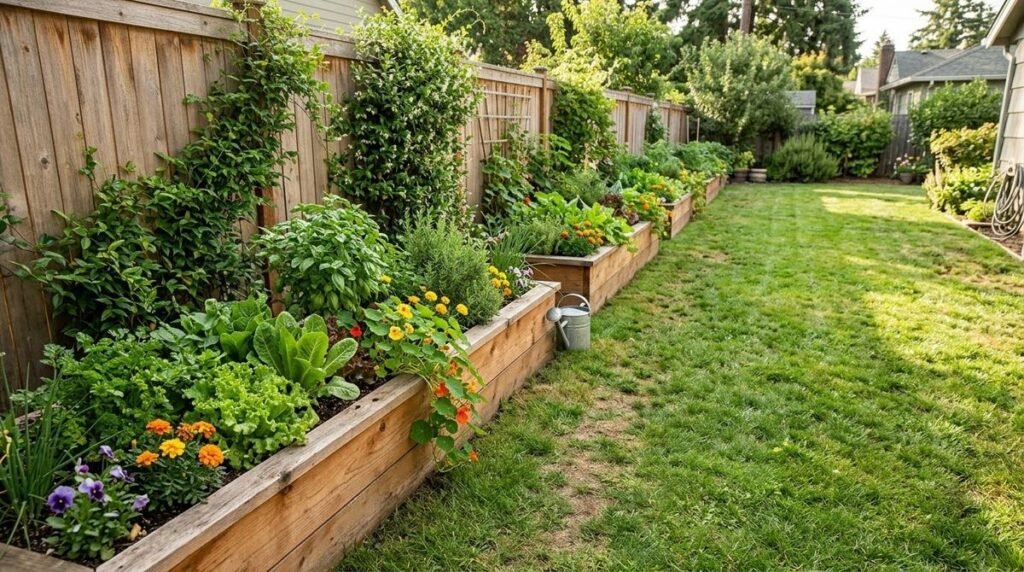
In a small yard, the edges are your most valuable planting space. Long, narrow raised beds along the fence leave the center open for living while giving you room for herbs, vegetables or flowers. Keep beds 18 to 24 inches deep so you can reach across them without stepping in. Cedar and galvanized steel kits are easy to assemble and last for years.
Tip: plant taller crops or climbers in the bed against the fence to soften it and hide it.
Rough cost: $50 to $150 per bed.
4. Go Vertical with Wall Planters
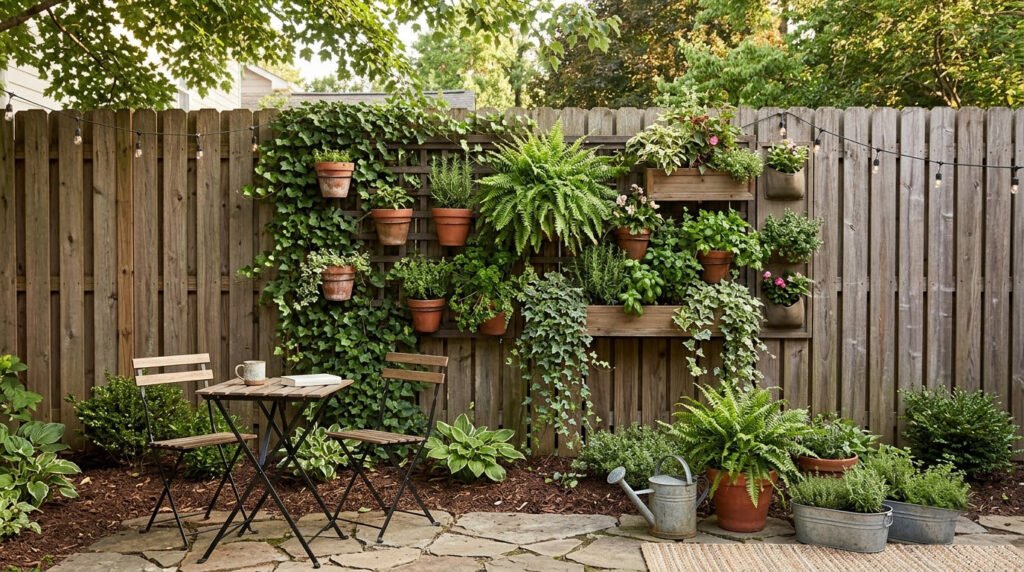
When ground space runs out, use the walls. Wall-mounted pockets, a simple trellis or a ladder shelf full of pots can turn a blank fence into a living backdrop. Vertical gardens draw the eye upward, which makes a small yard feel taller and more generous. Herbs, trailing ivy, ferns and strawberries all work well in wall planters.
Tip: group vertical planters in one section instead of spreading them out, so they read as a feature rather than clutter.
Rough cost: $30 to $120.
5. Choose a Foldable Bistro Set
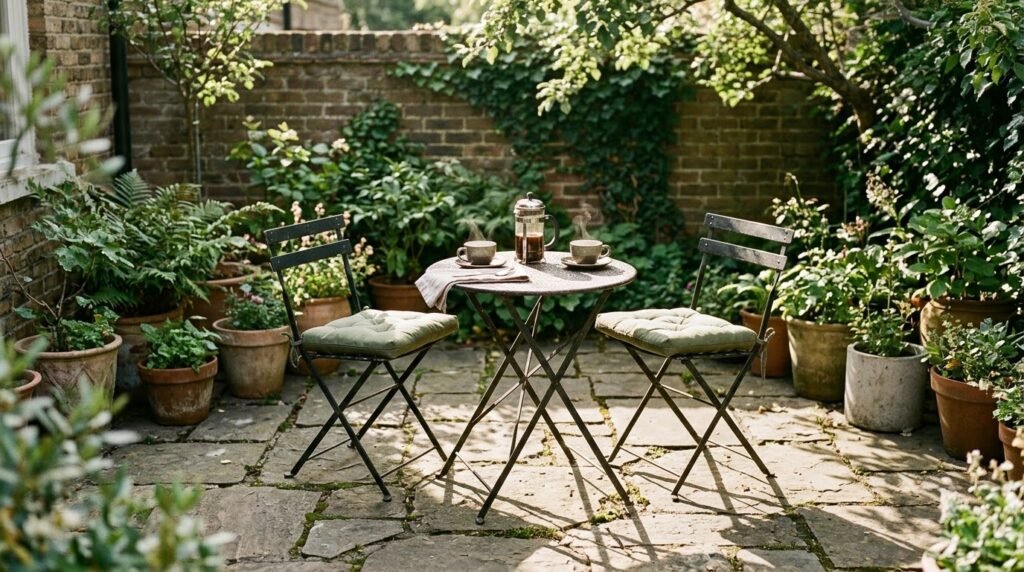
A full outdoor dining set rarely fits a small yard well. A two-seat bistro set gives you a spot for morning coffee or dinner for two, and it folds flat against the wall when you need the space. Metal and slatted wood sets look light and stay out of the way visually. Add a pair of outdoor cushions in your yard’s accent color to make it feel finished.
Tip: measure your patio first and leave at least 3 feet around the table so chairs can pull out comfortably.
Rough cost: $80 to $250.
6. Group Container Plants in Threes
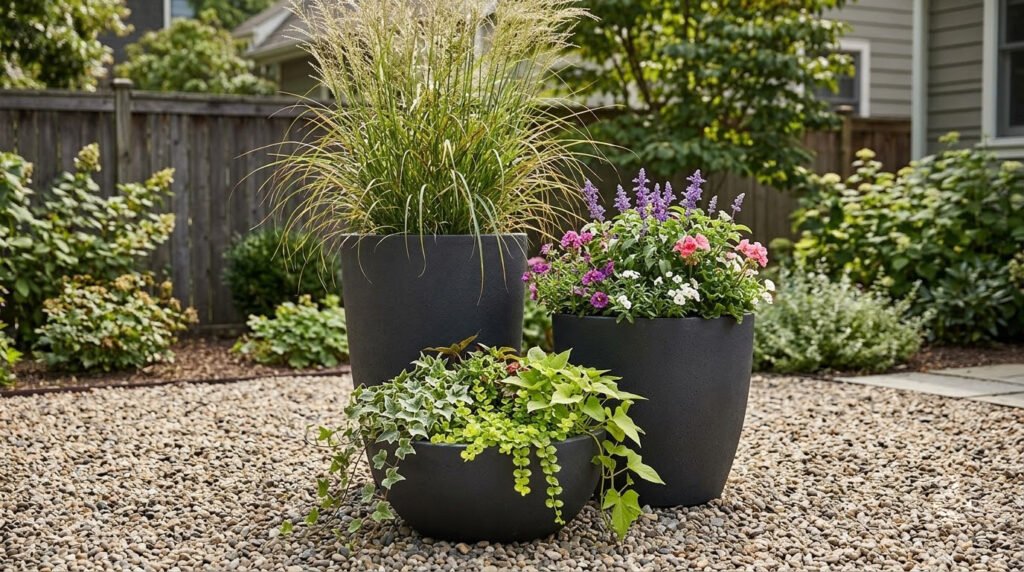
Pots are ideal for small yards and renters because you can move them, swap plants and start small. The secret is grouping. Three containers of different heights in the same color or material look intentional, while single pots dotted around look scattered. Try one tall planter with a small tree or grass, one medium pot with flowers and one low bowl with trailing plants.
Tip: bigger pots dry out more slowly, so choose fewer, larger containers rather than many tiny ones.
Rough cost: $40 to $150 for a group of three.
7. Lay a Stepping Stone Path
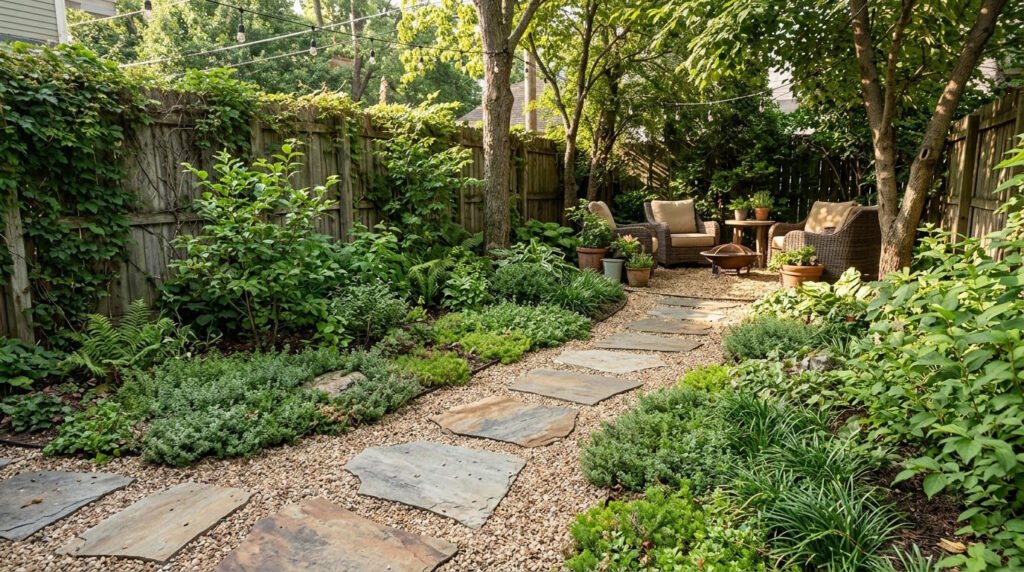
A path gives a small backyard structure and a sense of journey, even if it’s only a few yards long. Stepping stones set into gravel or groundcover are much cheaper than a solid path and feel softer. Space them about 24 inches apart, center to center, for a natural stride. Run the path on a slight curve or diagonal to make the walk feel longer (more on this trick below).
Tip: lay all the stones out on the ground and walk the route before you dig anything in.
Rough cost: $50 to $200.
8. Add a Cheap Privacy Screen
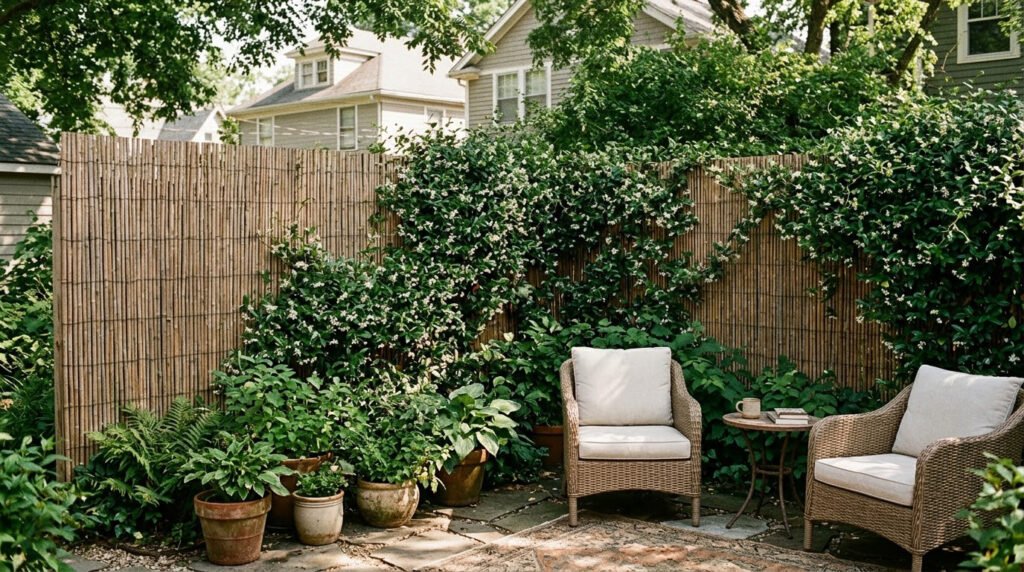
Small backyards are often overlooked by neighbors, which makes them hard to relax in. Rolled bamboo, reed fencing or a slatted wood panel can screen a seating corner quickly and cheaply. You don’t need to wrap the whole yard. Screening just the area where you sit is usually enough, and it keeps the rest of the yard feeling open.
Tip: pair a screen with a climbing plant like star jasmine or clematis for a greener, softer look over time.
Rough cost: $30 to $100 per section.
9. Use a Portable Fire Pit
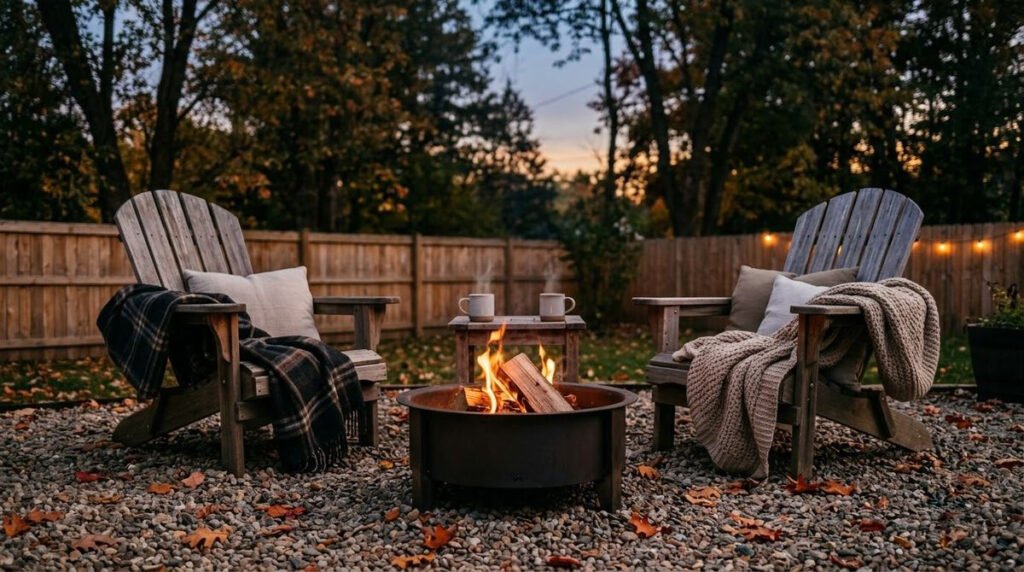
A fire pit makes a small yard usable well into fall and winter. Portable steel bowls and tabletop propane fire pits need no construction and can be moved or stored when you don’t need them. Place yours on gravel or pavers, never on grass or a wooden deck, and keep it well away from fences and overhanging branches.
Tip: check your local rules and HOA guidelines before buying, because some areas restrict wood-burning fire pits.
Rough cost: $60 to $200.
10. Define the Space with an Outdoor Rug
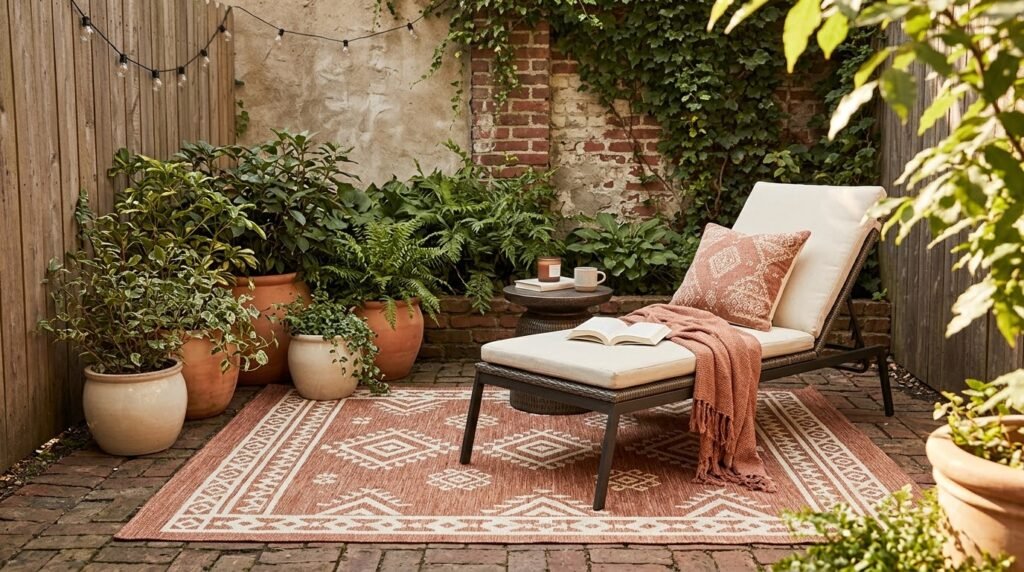
An outdoor rug works like a room divider you can roll up. It marks the lounge or dining zone, adds color and pattern, and makes hard surfaces feel more like a living room. Polypropylene rugs are cheap, fade-resistant and easy to hose off. Choose a size that fits the front legs of your furniture at least, so the zone looks anchored.
Tip: pick a rug in your yard’s main accent color and repeat that color in cushions and pots.
Rough cost: $30 to $120.
7 Designer Tricks to Make a Small Yard Look Bigger
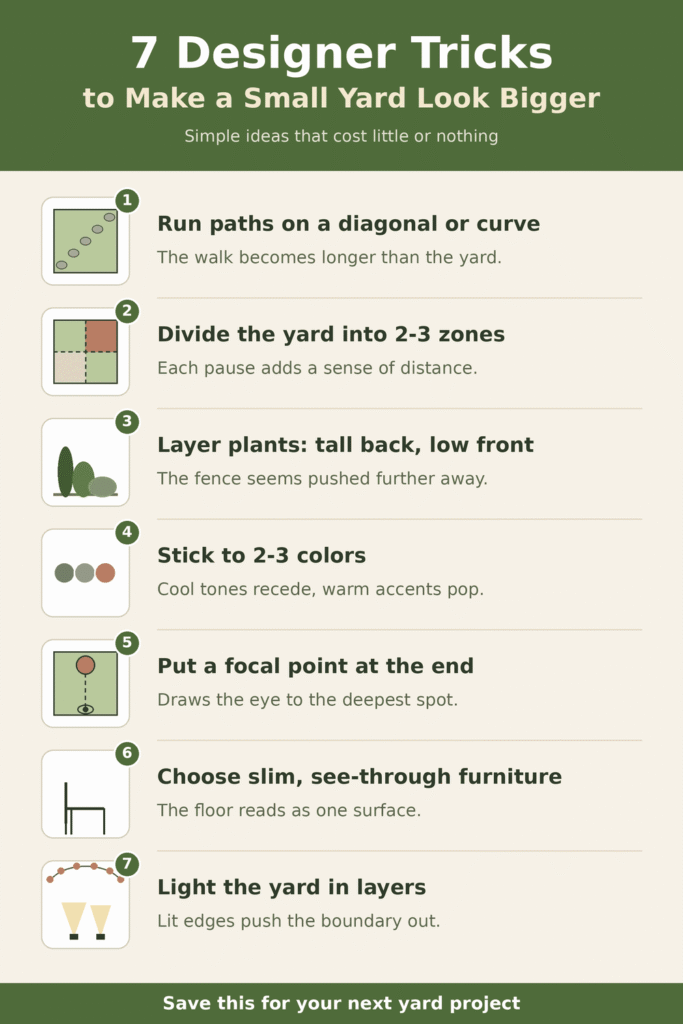
Budget ideas fill your yard. These tricks change how it feels. They’re the same principles I use when designing small spaces, and most of them cost nothing.
1. Run Paths on a Diagonal or a Curve
A straight path from door to fence shows the whole yard at once, so the eye measures it in a second. Turn the path on a diagonal or give it a gentle curve, and the walk becomes longer than the yard itself. Diagonals use the longest dimension of any rectangle, while curves hide part of the route behind plants. Because visitors can’t see the end right away, the space reads as deeper. Even a few stepping stones set at an angle across the lawn create this effect for very little money.
2. Divide the Yard into Two or Three Zones
It sounds backwards, but splitting a small yard makes it feel bigger. One open rectangle is understood at a glance; separate zones, like a dining spot, a lounge corner and a planting bed, make the eye stop and explore each one. Every pause adds a sense of distance. Define zones with simple changes: gravel versus pavers, an outdoor rug, a low planter or a single trellis. Keep the dividers low or see-through so they suggest separation without blocking views. The yard stays the same size, but it now feels like several rooms.
3. Layer Plants: Tall at the Back, Low in Front
Plants of one height form a flat wall that pulls the boundary closer. Layering creates depth: tall grasses, shrubs or climbers against the fence, medium perennials in the middle, and low groundcovers along the edge of the patio. The eye reads each layer as a step further away, so the fence seems pushed back. Layers also soften hard boundaries, which is key in small yards where fences dominate. For a quick start, use three heights in every bed and repeat the same plants so the layers look intentional, not crowded.
4. Limit Your Color Palette to Two or Three Colors
Too many colors break a small space into busy fragments and make it feel cluttered. A tight palette keeps the eye moving smoothly across the whole yard. Pick two or three colors for flowers, cushions and pots, and repeat them throughout. Cool tones like blue, purple and silver-green appear to recede, so placing them toward the back adds depth. Save warm, bright colors like orange or red for a few accents near the seating area. The result feels calm, connected and noticeably larger, without changing a single square foot.
5. Place a Focal Point at the End of the View
When the eye has nowhere to land, it stops at the fence and the yard feels short. A strong focal point at the far end draws the gaze to the deepest spot and makes the whole length register. Try a striking pot, a small water feature, a bench or a sculptural tree. An outdoor mirror on the fence works too: it reflects plants and light, suggesting space beyond the boundary. Line the focal point up with the view from your back door or main window, so it pays off every day.
6. Choose Slim, See-Through Furniture
Bulky furniture blocks sightlines and eats visual space even when it fits on paper. Choose pieces with thin legs, open frames and raised bases, such as metal bistro sets, slatted benches or wire chairs. When you can see the ground beneath and through furniture, the floor reads as one continuous surface, which makes the patio feel bigger. Foldable and stackable pieces help on busy days, and built-in benches along a wall save even more room. Keep cushions in your palette colors so furniture blends in instead of breaking up the view.
7. Light the Yard in Layers
At night, a single bright light over the door flattens a yard and stops the view at the edge of the glow. Layered lighting does the opposite. Combine string lights overhead for ambience, low path lights to trace the route, and uplights aimed at a tree or the back fence. Lighting the far boundary is the key trick: it pushes the visible edge outward and gives the space depth after dark. Use warm white bulbs for a cozy feel, and solar options keep this upgrade budget-friendly and wiring-free.
Front Yard Ideas on a Budget
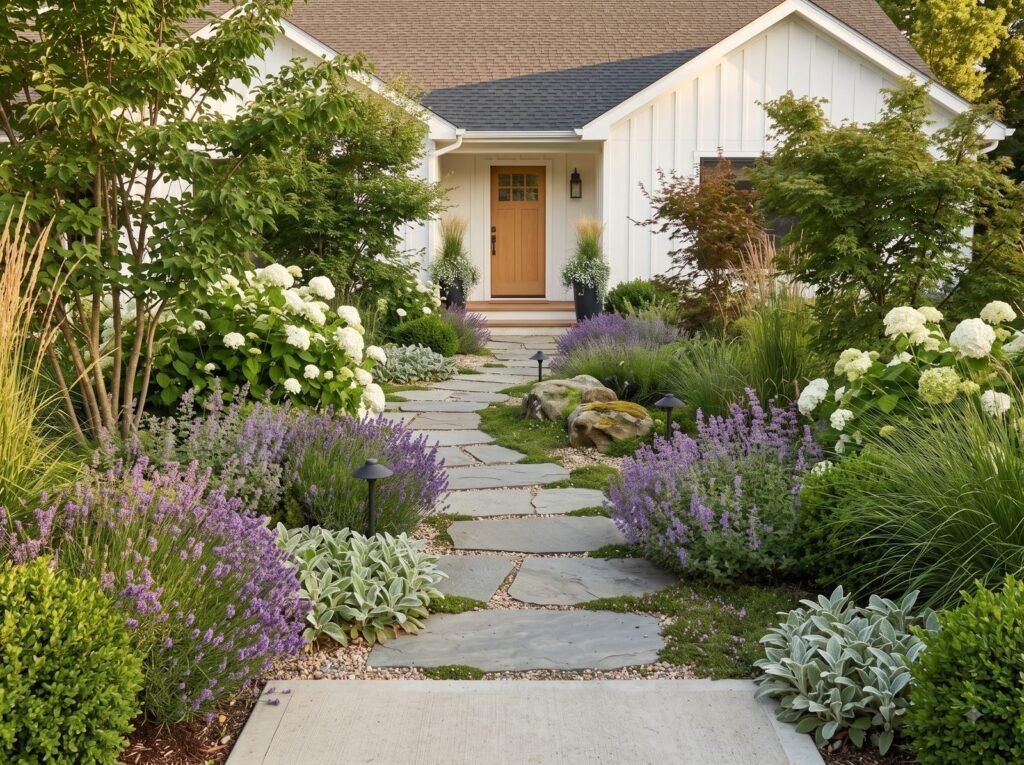
The same rules that make a small backyard feel bigger work out front too: one clear path, layered planting and a short list of plants repeated along the way. Here are six budget upgrades that change how your whole house looks from the street.
Edge Your Beds
Crisp edges make even simple planting look professionally maintained. Cut a clean line with a half-moon edger, or install steel, brick or plastic edging between lawn and beds, then top the beds with fresh mulch. This single weekend job often changes a front yard more than new plants do.
Soften the Path with Plants
Let low plants spill over the edges of your front walk. Lavender, catmint and silver lamb’s ear soften hard lines, and repeating the same three plants along the whole path makes the planting look designed, not random. A gentle curve and natural flagstone stepping stones make even a short walk feel like a garden.
Plant Along the Foundation
A bare strip where the house meets the ground makes a home look unfinished. Use a simple layered row: small evergreen shrubs for year-round structure, with lower perennials or groundcovers in front. Keep plants a little away from the wall so they have room to grow.
Frame the Door with a Pair of Pots
Two matching planters on either side of the front door instantly make an entrance feel welcoming and balanced. Choose pots large enough to suit the door, and fill them with something that changes by season, like grasses in fall and dwarf evergreens in winter.
Refresh the Door and Mailbox
A fresh coat of paint on the front door, new house numbers and a clean mailbox cost little but catch the eye first. A deep green, navy or warm black door works with most siding colors.
Light the Entry
Solar path lights along the walk and a warm porch light make your home look cared for at night, and they’re safer too.
Want the full plan? See my complete guide, Front Yard Landscaping Ideas on a Budget: A Curving Garden Path Makeover, with the planting plan, plant list and budget.
My Designer Tip: How I’d Lay Out a 16 x 26 ft Backyard
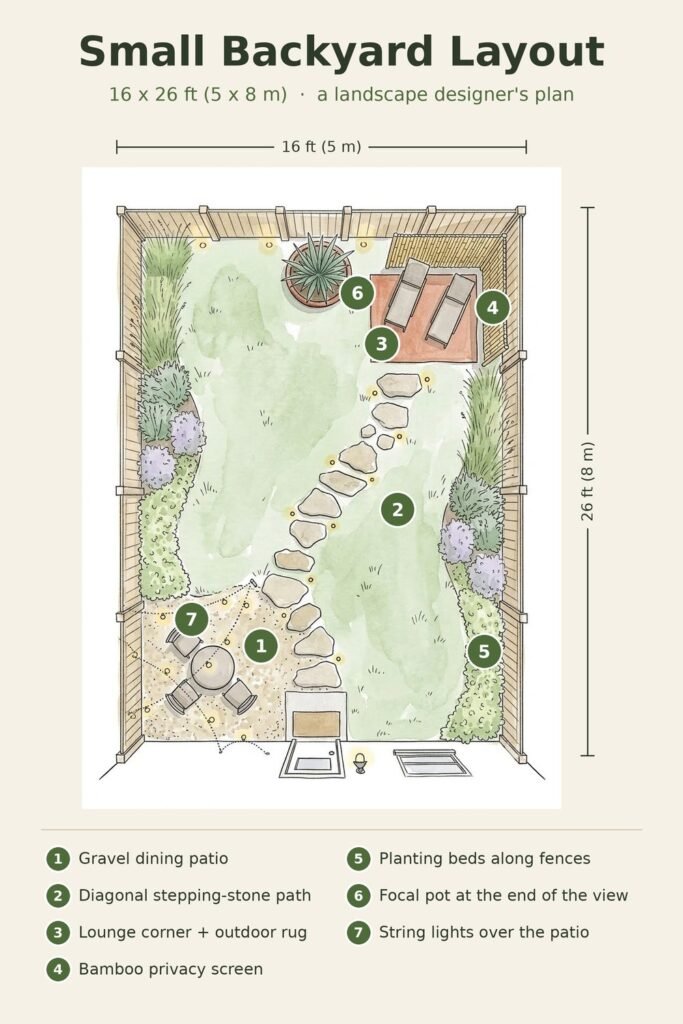
Here’s how I’d plan a typical small backyard of about 5 x 8 meters (16 x 26 ft). Keep the gravel dining patio right outside the back door so it’s easy to carry food out. Run a diagonal stepping-stone path from the patio to a small lounge corner at the back, anchored by an outdoor rug and screened on one side. Line both long fences with planting beds, layered tall at the fence and low at the front. Finish with a large planter as a focal point at the end of the view, and string lights over the dining patio for evenings outside. The result is two “rooms,” a journey between them, and a yard that feels much larger than it is.
Start Small, Then Build Up
You don’t need to do everything at once. Pick one idea that fixes your biggest frustration, whether that’s privacy, a muddy lawn or nowhere to sit, and build from there. Small yards reward small, smart changes.
If you found these ideas helpful, save this post to your Small Backyard Ideas board on Pinterest so you can find it later. And if you’d like to bring some green indoors too, read my guide to easy indoor plants for beginners.