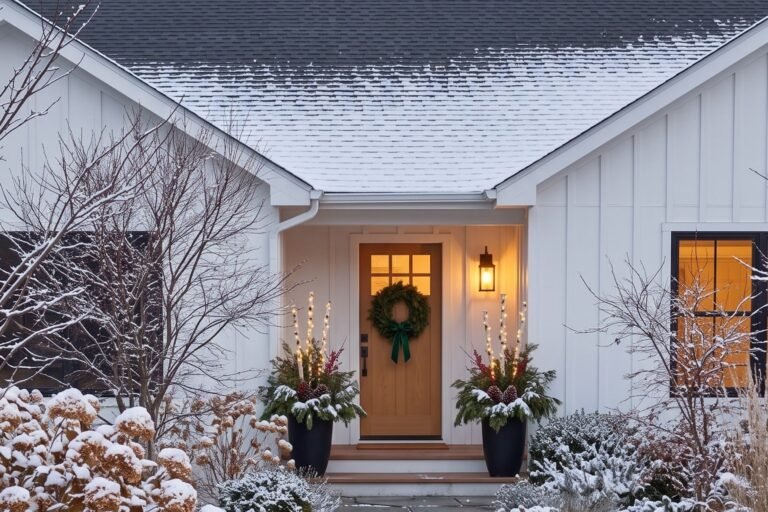
This post may contain affiliate links. If you buy through them, I may earn a small commission at no extra cost to you. Read my disclosure.
Most front yards look the same: a strip of tired lawn, a straight concrete walk and a couple of shrubs pushed against the house. It works, but it doesn’t welcome anyone home. The good news is that you don’t need a big budget to change that. You need one good path, a planting plan with a few layers, and the patience to repeat the same plants instead of buying one of everything.
I’m a landscape designer, and this is the kind of makeover I’d suggest to a friend with a small budget. Below you’ll find the full plan: how to lay out a curving stone path, the 10 plants I’d use (all easy to find in US garden centers), a realistic cost breakdown, and seven more cheap ideas if you only have a weekend.
Before and After
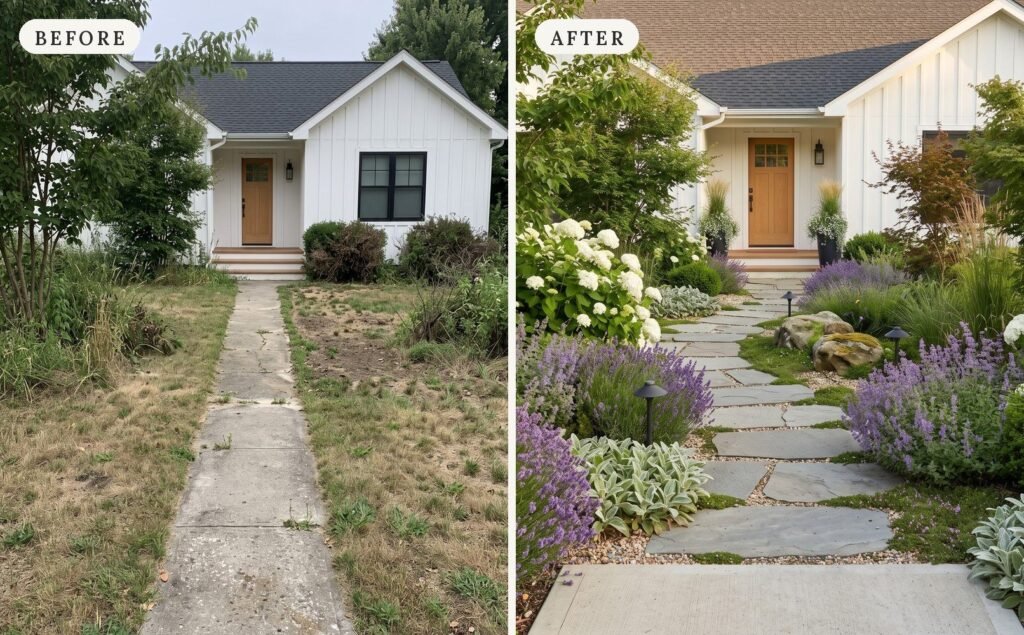
The “before” is a typical starter-home front yard: patchy lawn, a cracked straight walkway and two overgrown shrubs. The “after” keeps the same house and the same footprint. What changed is the path, the planting and a few small details.
The makeover at a glance
- Path: about 25 ft of natural flagstone stepping stones in a gentle curve
- Planting: 10 plant varieties in three layers, about 40 plants in total
- Budget: roughly $1,250–$1,750 if you do it yourself
- Time: two to three weekends
- Climate: USDA zones 5–8, full sun to part shade
Watch the makeover
One tired front yard, one curving garden path.
- Dig a curved path and lay landscape fabric
- Set flagstone stepping stones in gravel
- Plant in three layers
- Add planters and soft path lights
Visualization created with AI tools.
Step 1: Let the Path Curve
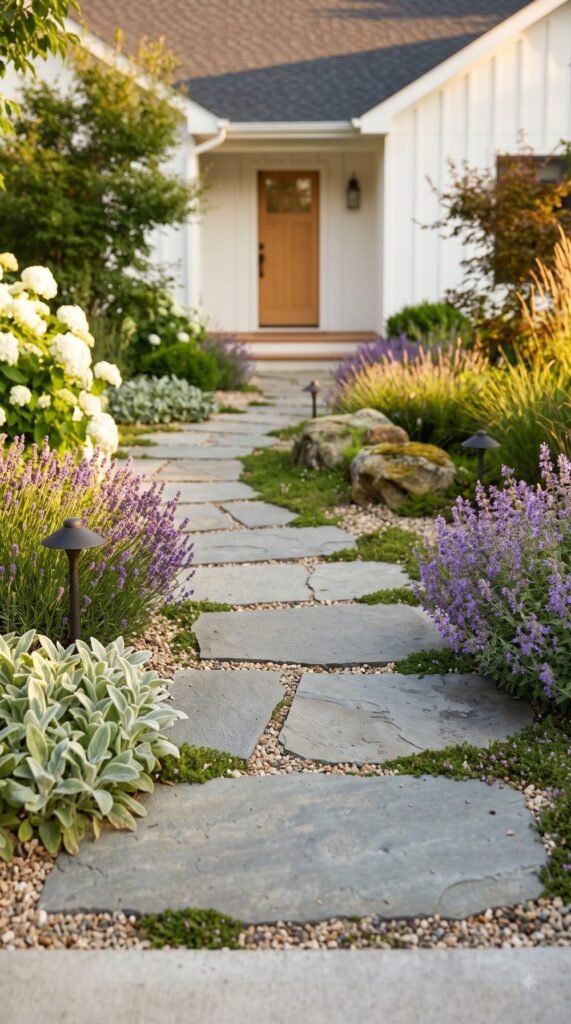
A straight walk gets you to the door. A curved one makes the trip feel like a garden. A gentle S-shape also creates “pockets” on the inside of each bend, which are perfect spots for a boulder, a clump of grass or a small tree.
How to lay it out:
- Use a garden hose to sketch the curve on the lawn. Walk it a few times; if it feels awkward, soften the bend.
- Keep the path about 4 ft wide so two people can walk side by side and plants can spill over without blocking it.
- Dig out about 4 in along the path, then level and tamp the soil.
- Roll out a commercial-grade landscape fabric (non-woven geotextile) over the whole path area. Overlap the seams by 6 in and pin it every 12–18 in with landscape staples. It keeps the gravel from sinking into the soil and blocks most weeds from coming up between the stones.
- Add 2–3 in of compacted paver base and a thin layer of sand on top of the fabric, then bed each flagstone (1.5–2 in thick, about 24 in apart center to center) so it doesn’t rock.
- Fill the gaps with pea gravel. If you want creeping thyme between the stones, cut small X-shaped slits in the fabric under those joints and fill them with soil before planting. Thyme handles light foot traffic and smells wonderful when you step on it.
Reusing the old concrete walk as a base is tempting, but breaking it out lets you create the curve, and the broken pieces make a great sub-base for the new stones.
Step 2: Plant in Three Layers
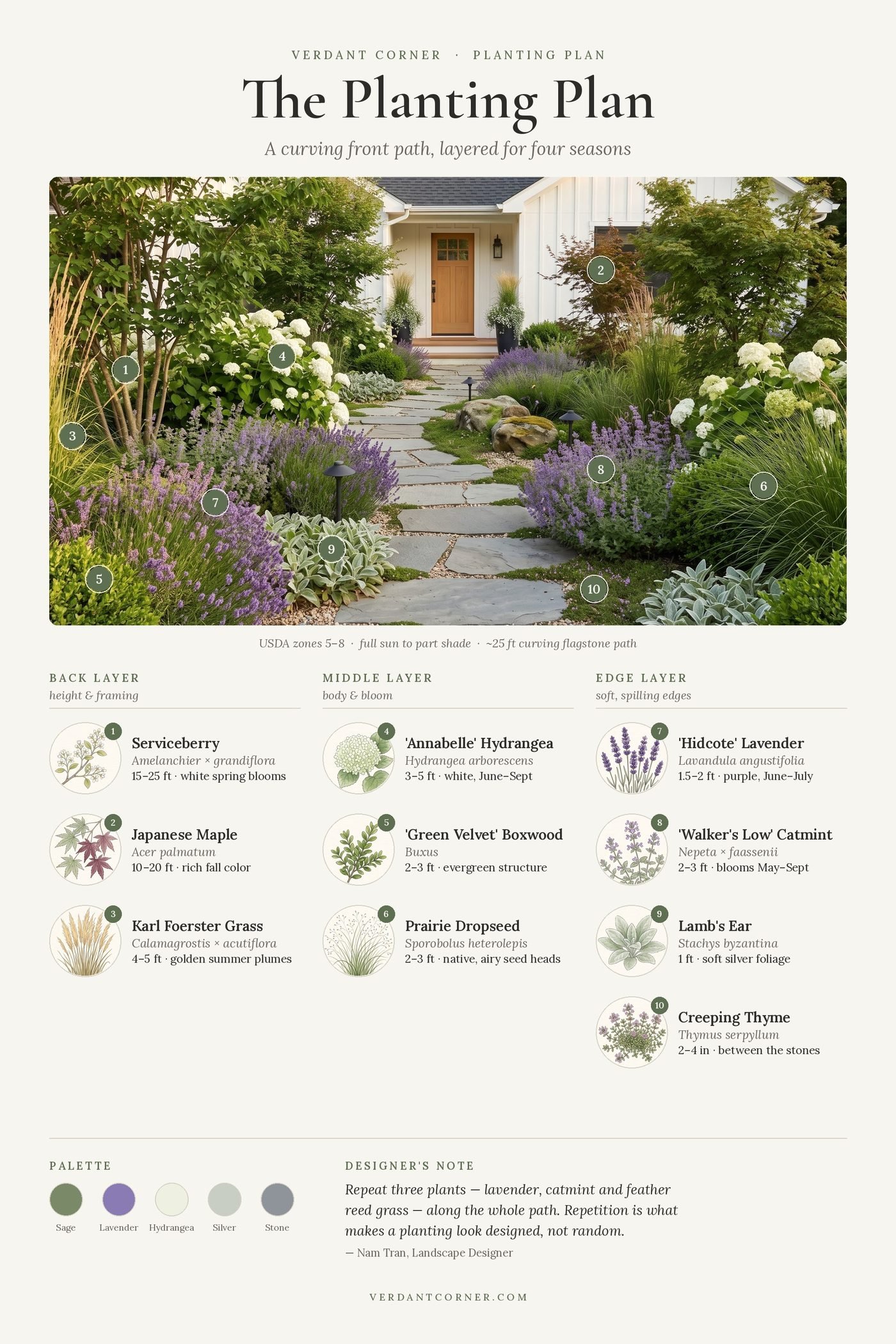
Good planting looks effortless, but it almost always follows the same rule: tall at the back, medium in the middle, low and soft at the edge. Here is the exact plan from this makeover.
Back layer: height and framing
- Serviceberry (Amelanchier × grandiflora). A small multi-stem tree with white spring flowers, summer berries for birds and orange fall color. Native and very forgiving. 15–25 ft.
- Japanese maple (Acer palmatum). A small, elegant tree for the other side of the path. Give it afternoon shade in hot summers. 10–20 ft.
- Karl Foerster feather reed grass (Calamagrostis × acutiflora). Upright golden plumes from early summer through winter. 4–5 ft.
Middle layer: body and bloom
- ‘Annabelle’ hydrangea (Hydrangea arborescens). Big white flower heads from June to September. It blooms on new wood, so even a hard winter won’t stop the flowers. 3–5 ft.
- ‘Green Velvet’ boxwood (Buxus). Round evergreen shapes that keep the yard looking structured in winter. 2–3 ft.
- Prairie dropseed (Sporobolus heterolepis). A native grass with fine, arching leaves and airy seed heads in late summer. 2–3 ft.
Edge layer: soft, spilling edges
- ‘Hidcote’ lavender (Lavandula angustifolia). Deep purple flowers in June and July. Needs sun and good drainage. 1.5–2 ft.
- ‘Walker’s Low’ catmint (Nepeta × faassenii). The hardest-working edging plant I know. Blue-purple flowers from May to September if you shear it after the first flush. 2–3 ft.
- Lamb’s ear (Stachys byzantina). Soft silver leaves that brighten the edge and look great next to purple flowers. 1 ft.
- Creeping thyme (Thymus serpyllum). For the joints between stones. 2–4 in.
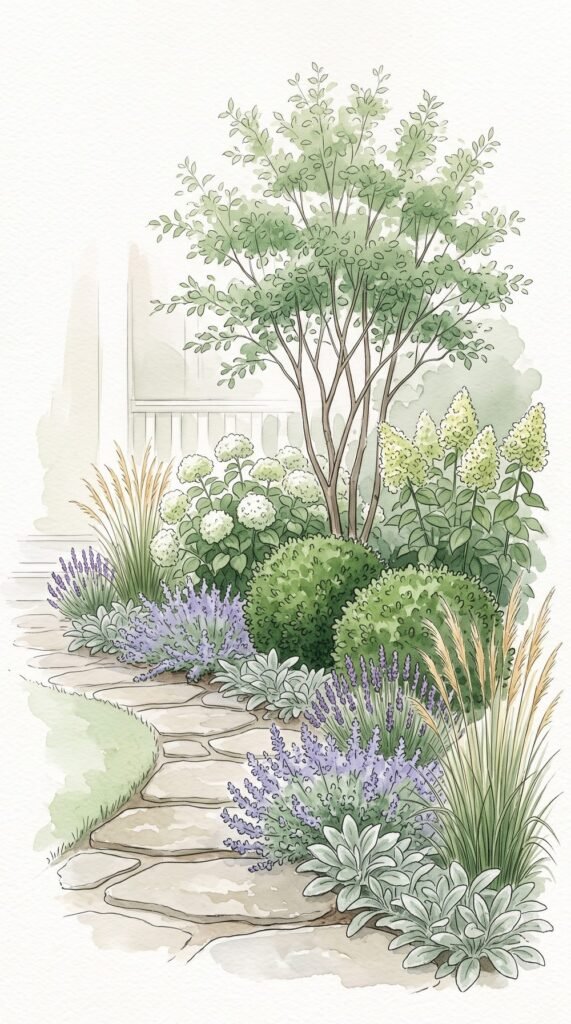
Budget tip: buy perennials and grasses in 1-gallon pots instead of larger sizes. They cost a third of the price and catch up within one season. Space perennials 18–24 in apart and shrubs 3–4 ft apart.
Step 3: Repeat Three Plants
This is the trick that makes a planting look designed instead of random. Pick three plants and repeat them along the whole path. In this yard, it’s lavender, catmint and feather reed grass. They appear on both sides, at the start, at the bends and near the door.
Designer’s note: When clients ask why their garden looks busy, the answer is almost always “too many different plants.” Ten varieties repeated in groups of three to five will always look better than thirty plants used once each. — Nam Tran
Step 4: Add Boulders and Soft Lighting
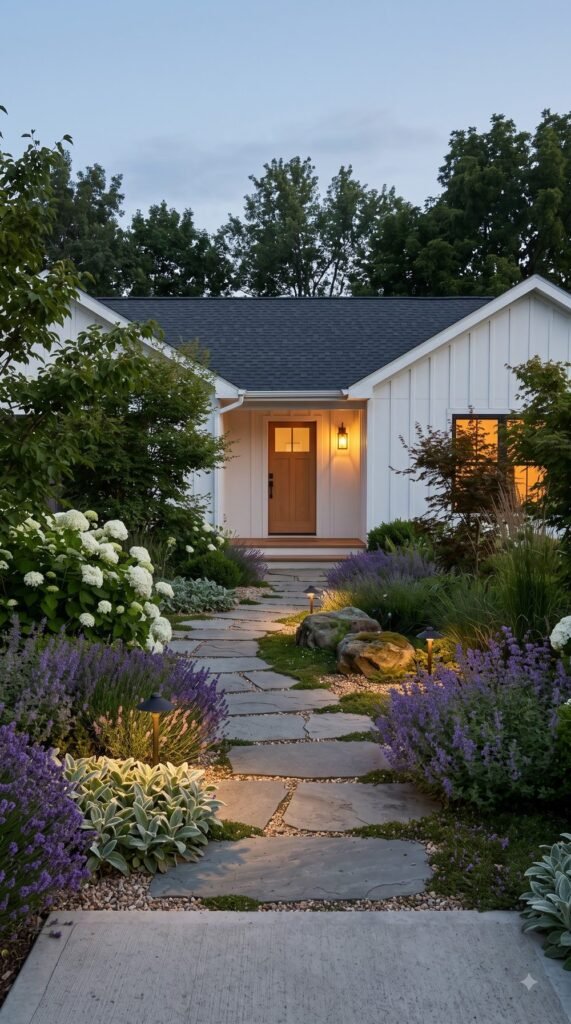
Two or three natural boulders tucked into the inside of the curves make the garden feel settled and older than it is. Half-bury them so they look like they’ve always been there.
At night, low path lights along the bends trace the route and make the planting glow. Solar lights keep this step cheap and wire-free. Choose warm white (around 2700–3000K) and space them every 6–8 ft rather than lining the path like a runway. Add one warm wall lantern by the door and you’re done.
Budget Breakdown
| Item | Quantity | Approx. cost |
|---|---|---|
| Natural flagstone stepping stones | 18–22 stones | $200–$330 |
| Landscape fabric + staples | 1 roll (3 × 50 ft) + 1 box of staples | $25–$45 |
| Paver base, sand and pea gravel | ~1.5 cu yd total | $150–$220 |
| Small trees (serviceberry, Japanese maple) | 2, in 5-gallon pots | $150–$300 |
| Shrubs (hydrangea, boxwood) | 8–10 | $200–$300 |
| Perennials and grasses, 1-gallon | 25–30 | $300–$400 |
| Creeping thyme plugs | 1 flat | $30–$50 |
| Boulders | 2–3 | $60–$150 |
| Solar path lights | 6–8 | $80–$150 |
| Mulch | 1–2 cu yd | $40–$80 |
| Total (DIY) | ≈ $1,250–$1,750 |
Prices vary by region. To save more, do the project in two phases: path and back layer this year, edge planting next spring.
7 More Cheap Front Yard Ideas
Short on time or budget? Each of these takes a weekend or less.
1. Edge Your Beds and Add Fresh Mulch
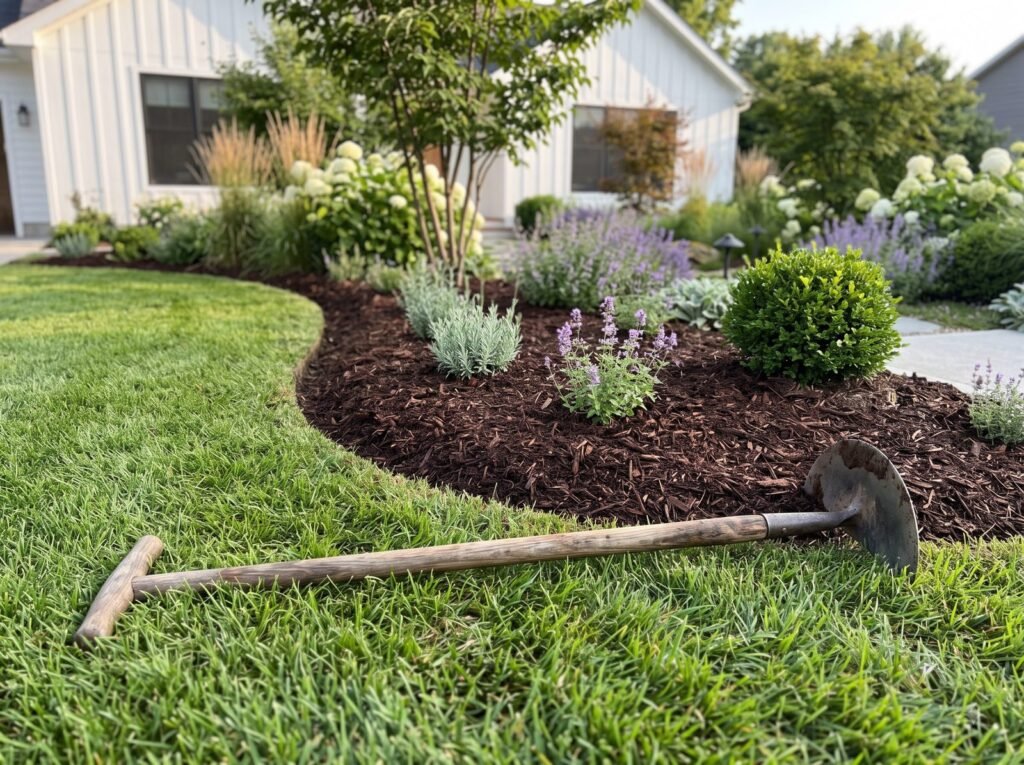
A clean edge between lawn and beds makes even simple planting look professionally kept. Cut it with a half-moon edger or install steel edging, then top up with 2 in of mulch. Cost: under $100.
2. Frame the Door with a Pair of Pots
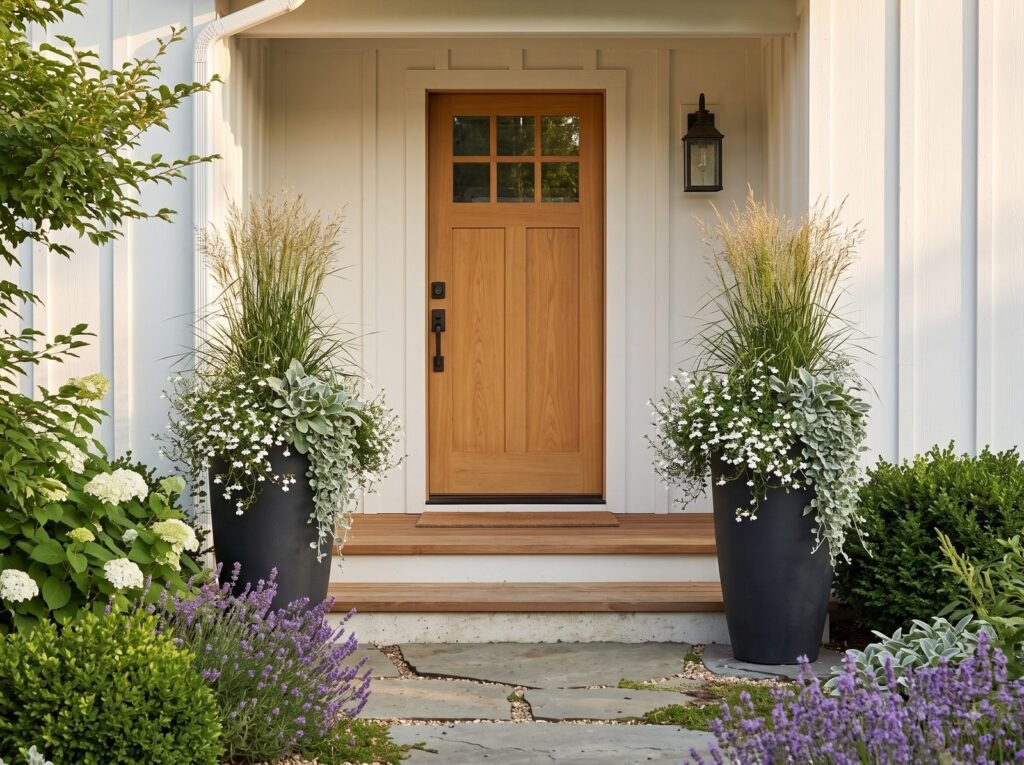
Two matching planters on either side of the door make the entrance feel balanced and welcoming. Go bigger than you think: each pot should be at least a third of the door’s height. Change the planting by season.
3. Refresh the Door and Mailbox
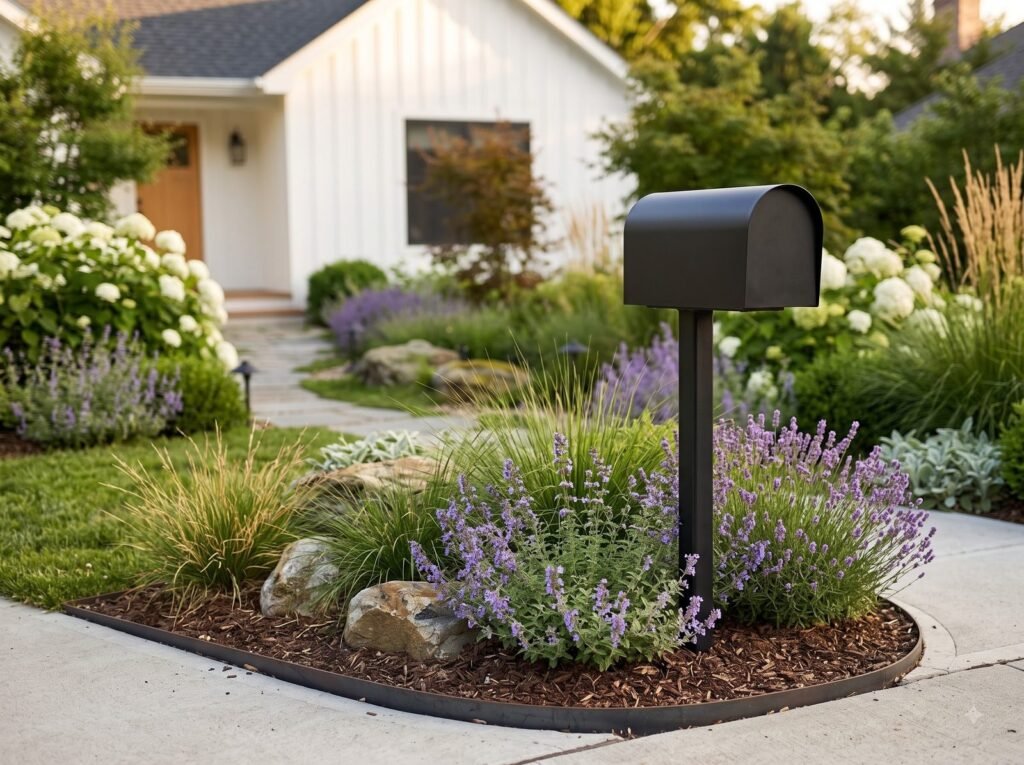
A new coat of paint on the door, modern house numbers and a small planting bed around the mailbox post are the first things people notice. Repeat one or two plants from your main beds around the mailbox to tie everything together.
4. Plant Along the Foundation
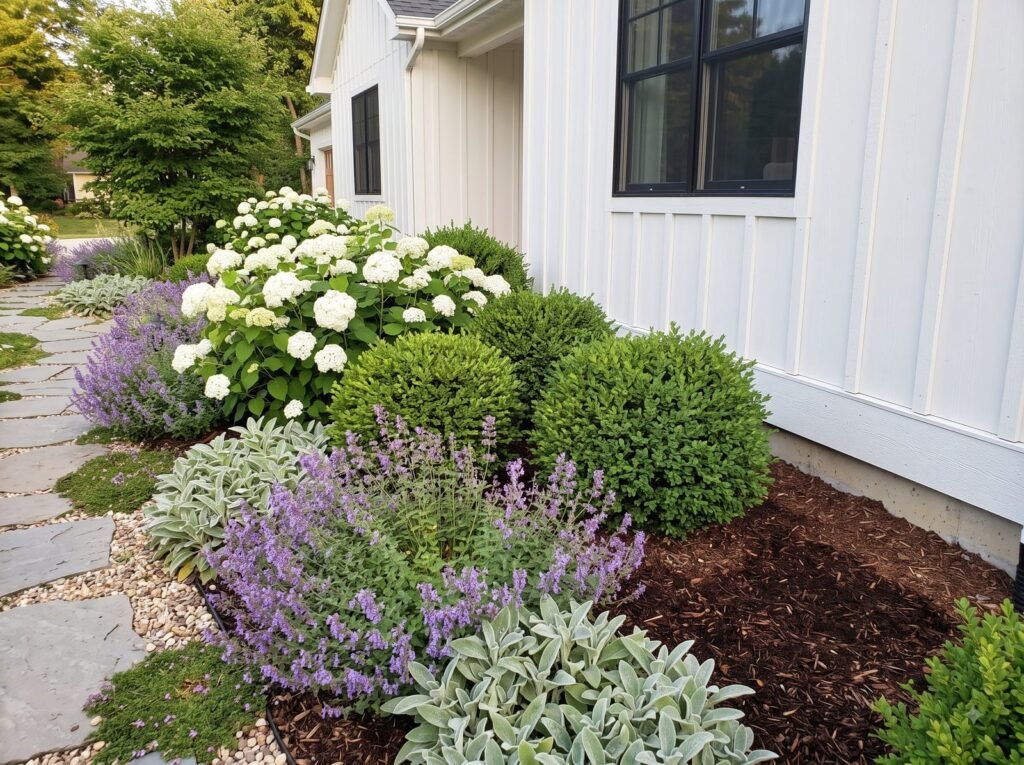
A bare strip where the house meets the ground makes a home look unfinished. Plant a simple layered row: evergreen shrubs at the back, flowering perennials in front. Keep everything at least 2–3 ft away from the wall for air flow and maintenance.
5. Swap Some Lawn for Gravel and Tough Plants
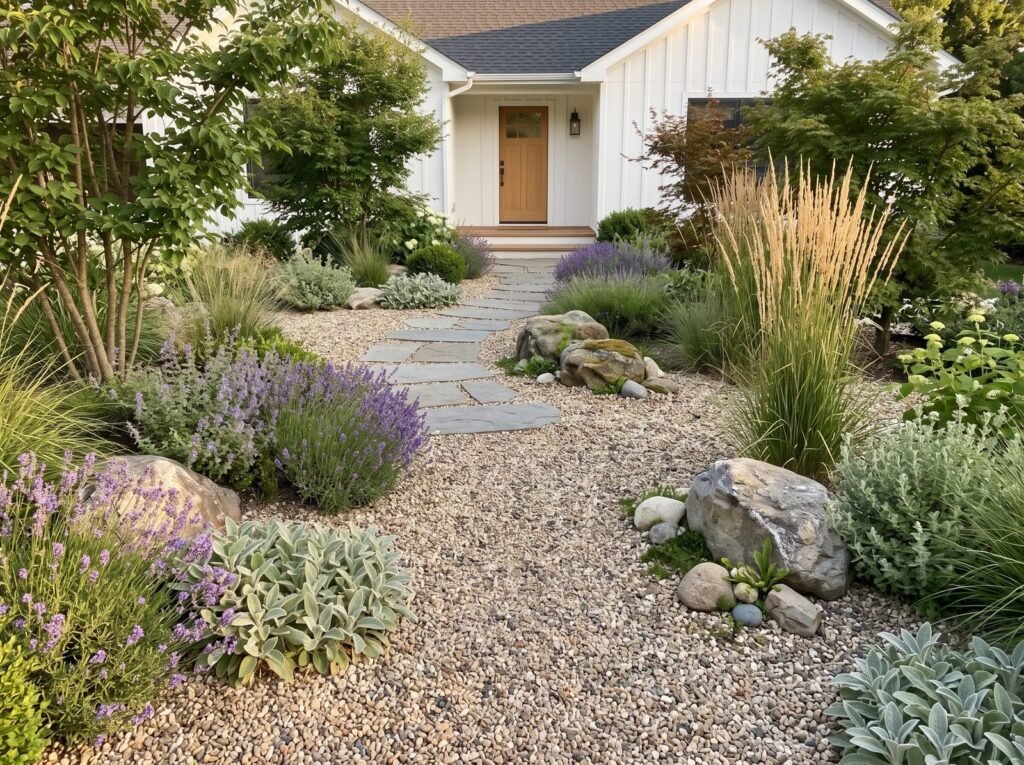
Every square foot of lawn you replace is a square foot you don’t have to mow or water. A gravel garden with grasses, lavender and a few boulders looks modern and needs very little care once established.
6. Add Hat-Top Path Lights Among the Plants
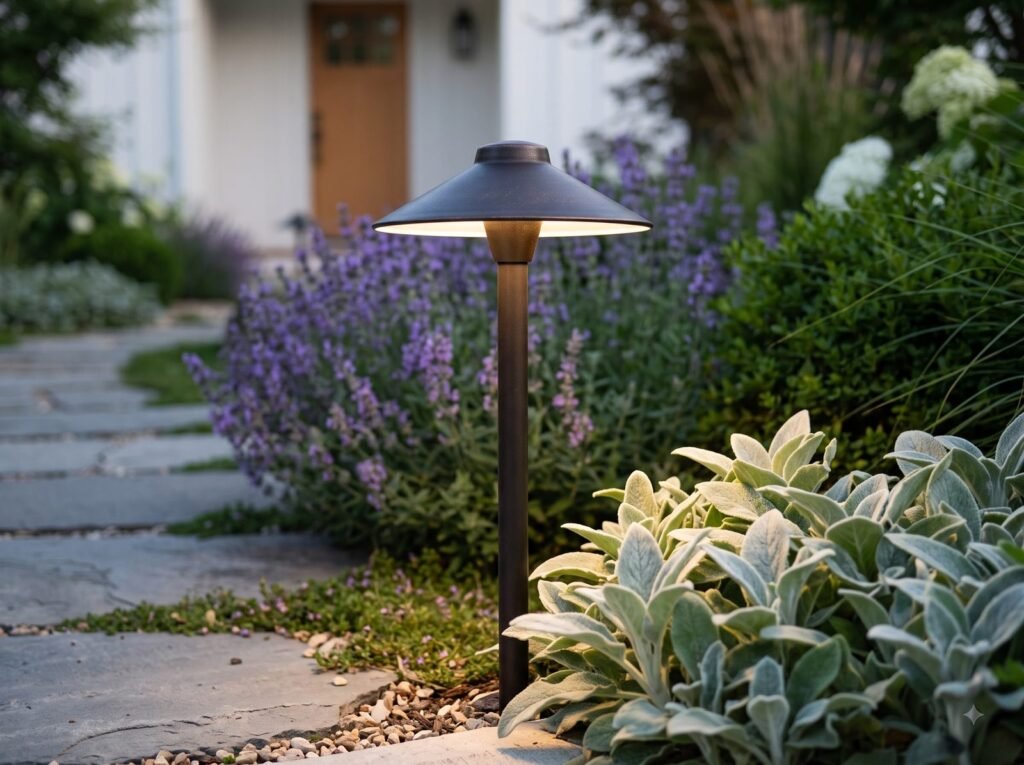
Hat-top (or “mushroom”) path lights have a slim post and a wide, flat shade that pushes light down and outward. Instead of glaring into your eyes, they paint soft circles of light on the path and the plants around them. Tuck them into the planting so the post almost disappears between lavender and lamb’s ear, set them 18–24 in tall, and space them every 8–10 ft on alternating sides. A dark bronze or black finish blends into the foliage by day. Low-voltage brass or aluminum fixtures cost around $40–$120 each and last for years; solar versions start near $20.
7. Choose Native Plants
Native plants like serviceberry, prairie dropseed, coneflower and little bluestem are adapted to local conditions, need less water once established and feed pollinators. Your local extension office can tell you which natives suit your area.
Easy Maintenance Calendar
- Late winter: cut grasses down to 4–6 in; cut ‘Annabelle’ hydrangeas back to about 12–18 in.
- Spring: top up mulch, pull early weeds, check that stepping stones are level.
- Early summer: shear catmint by a third after its first flush for a second round of flowers.
- After flowering: lightly trim lavender, never into the old wood; remove lamb’s ear flower stalks to keep it tidy.
- Fall: plant new perennials and shrubs. Cool weather and fall rain help roots establish before winter.
Frequently Asked Questions
What is the cheapest way to landscape a front yard?
Edge your beds, add mulch, plant perennials from 1-gallon pots and repeat a few varieties. These steps cost little and make the biggest visual difference.
What are the best low-maintenance plants for a front yard?
Catmint, lavender, prairie dropseed, feather reed grass, boxwood and ‘Annabelle’ hydrangea are all tough, long-lived and need little care once established in zones 5–8.
How wide should a front walkway be?
About 4 ft is comfortable for two people side by side. Never go below 3 ft.
When is the best time to plant a front yard?
Early fall is ideal in most of the US. Spring is the second-best option.
Shop This Project
These are the products I’d pick for this project. They’re affiliate links, so I may earn a small commission at no extra cost to you.
- Non-woven geotextile fabric, 4 oz, 3 × 50 ft: the layer under the stones and gravel
- 6-inch galvanized landscape staples: to pin the fabric every 12–18 in
- Metal landscape edging: for a crisp line between lawn and beds
- Half-moon lawn edger: to cut clean bed edges by hand
- Kante 24-inch round tapered concrete planter in black: buy two for the door; heavy enough to stay put in the wind
- Bronze-finish solar path lights, warm white: the budget, wire-free option; the bronze finish pairs well with brass path lights
- VOLT solid brass flat-hat path light, bronze (12V): the long-lasting low-voltage option
Start with the Path
If you only do one thing this year, replace the straight walk with a gentle curve and plant its edges. Everything else can grow around it, one season at a time.
Looking for ideas for the back of the house too? Read my 10 Small Backyard Ideas on a Budget, and save this post to your Front Yard board on Pinterest so you can find the plant list later.